
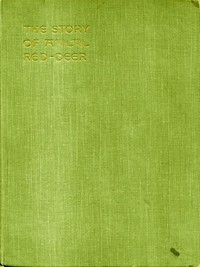
The Story of a Red Deer by Sir J. W. Fortescue
Published in 1897, The Story of a Red Deer is a unique and often overlooked classic. It’s a fictional biography, tracing the entire life cycle of a wild stag in the Exmoor region of England. The book follows our protagonist from his birth—a fragile, spotted calf learning the language of the forest from his mother—through the trials of adolescence, the rivalries of the rut, and the constant dance with danger that defines existence in the wild.
The Story
The plot is the arc of a life. We see the young deer, whom Fortescue simply calls ‘The Red Deer,’ navigate his world. He learns which scents mean safety and which spell death. He experiences the camaraderie of the herd and the loneliness of being an outsider. He fights other stags for territory and mates, feeling the surge of power and the ache of wounds. The central, ever-present tension isn’t a villain in the traditional sense, but the environment itself: harsh winters, natural predators, and, most persistently, the huntsmen. The narrative builds towards the inevitable, poignant encounters with the hunt, framed not as sport but as a fundamental and deadly part of the deer's reality.
Why You Should Read It
What makes this book special is its perspective. Fortescue uses his incredible knowledge of natural history and the countryside to get inside the animal's head. You don't just watch the deer run; you feel the heave of its lungs and the pounding of its heart. You understand its instincts. The writing is lush and detailed, painting Exmoor in all its misty, rugged glory. It’s a book that slows you down and makes you pay attention to a world we usually just glimpse through a car window. While it’s a product of its time (the hunt is described with a period-typical detachment), the core emotion—the deer’s will to live—feels timeless and deeply moving.
Final Verdict
This is a perfect read for anyone who loves nature writing, classic animal stories like Bambi (which it likely influenced), or historical fiction that feels authentic. It’s for the reader who wants to be immersed in a different consciousness and a vanished landscape. If you enjoy the works of Henry Williamson or the quiet observation of Richard Jefferies, you’ll find a kindred spirit here. It’s a short, powerful, and surprisingly emotional journey into the heart of the wild.
This digital edition is based on a public domain text. Knowledge should be free and accessible.
Kenneth Hill
10 months agoA bit long but worth it.
Michelle Moore
1 year agoEnjoyed every page.
Robert Thompson
1 year agoIf you enjoy this genre, the pacing is just right, keeping you engaged. Highly recommended.
Linda Sanchez
6 months agoComprehensive and well-researched.


Emma Davis
5 months agoA bit long but worth it.