
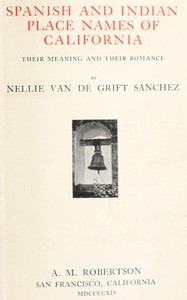
Spanish and Indian place names of California: Their Meaning and Their Romance
Imagine you're holding a key that unlocks the hidden stories behind every town, river, and mountain in California. That's what this book feels like. Published in the early 20th century, it's not a novel with a traditional plot. Instead, the "story" is the unfolding discovery of how California got its place names. Nellie Sanchez acts as your guide, systematically working through the state, explaining the origins of hundreds of names.
The Story
The book is organized like a friendly, encyclopedic tour. Sanchez starts with the big, obvious names from the Spanish era—the "San" and "Santa" places linked to missions and saints. She explains the history behind them in a way that's easy to follow. Then, she digs into the tougher, more mysterious names that come from Native American languages. Here, she often presents different theories from historians and linguists of her time, showing how meanings can get lost or changed. She also covers names from the later American period that borrowed or adapted these older words. The narrative drive comes from the simple, compelling question: "What does this name mean, and how did it get here?"
Why You Should Read It
What makes this special is Sanchez's genuine passion. She wasn't a distant academic; she was a Californian piecing together her home's story. You can feel her excitement when she tracks down a likely meaning for a puzzling name. It turns a simple drive into an adventure. You'll never see "Malibu" or "Tahoe" the same way again. You start to understand the layers of history—the Spanish missionaries naming a place after a saint, the American settlers mishearing a Native word, and the romanticized stories that stuck. It connects the landscape directly to the people who lived on it long before us.
Final Verdict
This is a perfect book for curious minds who love California, history, or etymology. It's for the road-tripper who wants more from their journey, the local history enthusiast, or anyone who likes the idea of everyday words holding secret pasts. It's not a fast-paced thriller, but a slow, rewarding exploration. Keep a copy in your car. Next time you pass a sign for a place like "Cajon Pass" or "Paso Robles," you can smile, because you'll know the story it's trying to tell.
This book is widely considered to be in the public domain. You do not need permission to reproduce this work.
Paul Davis
11 months agoI was particularly interested in the case studies mentioned here, the critical analysis of current industry standards is very timely. I appreciate the effort that went into this curation.
Emma Hill
4 months agoGreat reference material for my coursework.
William Rodriguez
6 months agoVery helpful, thanks.





Emily Hernandez
3 months agoUnlike many other resources I've purchased before, the author’s unique perspective adds a fresh layer to the discussion. A solid investment for anyone's personal development.