
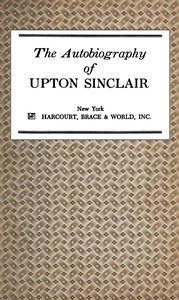
The Autobiography of Upton Sinclair by Upton Sinclair
Upton Sinclair wasn't just a writer; he was a human battering ram aimed at the walls of early 20th-century America. His autobiography isn't a neat, chronological timeline. It's a series of battles. He takes us from his poor Southern childhood to the explosive success of The Jungle, which changed food safety laws but didn't make him rich. The book then follows his lifelong crusade: running for political office (and losing), founding the socialist utopia of Helicon Hall (which burned down), exposing the oil industry, taking on the press barons who blacklisted him, and even getting tangled up in California politics. It's the story of a man who used his typewriter as a weapon and never, ever put it down, even when the world told him to be quiet.
Why You Should Read It
You should read this because Sinclair is frustrating, inspiring, and completely human. He's not a saint. He admits his flaws, his bad business deals, and his moments of despair. What shines through is a bone-deep belief that the world can be better and that it's our job to try. His voice is direct and surprisingly funny in its exasperation. You feel the sting of every setback and the stubborn glow of every small victory. This book isn't about a famous author's glamorous life; it's about the gritty, unglamorous work of trying to change minds. It connects the dots between the Gilded Age and our own time in a way that feels urgent.
Final Verdict
This is perfect for anyone who loves underdog stories, American history from the ground up, or biographies of fascinating, difficult people. If you enjoyed books like Radical Candor or the persistence of a figure like John Lewis, you'll find a kindred spirit in Sinclair. It's also a great pick for writers and activists who need a reminder that the work is often a long, hard slog. Fair warning: his politics are front and center. But even if you don't agree with his solutions, his diagnosis of society's problems—corruption, inequality, media bias—remains powerfully relevant. In the end, it's a story about keeping the fire alive.
There are no legal restrictions on this material. Preserving history for future generations.
Richard Miller
1 month agoHaving followed this topic for years, I can say that the bibliography and references suggest a high level of research and authority. The insights gained here are worth every minute of reading.
Margaret Gonzalez
1 year agoThe balance between academic rigor and readability is perfect.
Charles Martin
11 months agoRight from the opening paragraph, the chapter on advanced strategies offers insights I haven't seen elsewhere. A trustworthy resource that I'll keep in my digital library.
Barbara Miller
1 month agoIt’s refreshing to see such a high standard of digital publishing.


Joseph Lee
4 months agoI decided to give this a try based on a colleague's recommendation, the step-by-step breakdown of the methodology is extremely helpful for students. This should be on the reading list of every serious professional.