
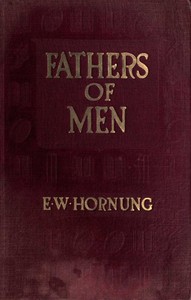
Fathers of Men by E. W. Hornung
E.W. Hornung is best known for creating A.J. Raffles, the cricket-playing thief, but in Fathers of Men, he turns his attention to a different kind of English institution: the public school. Published in 1912, the book feels both of its time and startlingly relevant in its exploration of pressure and identity.
The Story
The story centers on Jan Rutter, a sensitive new boy arriving at a school that worships athletic achievement above all else. Jan has a problem: he's a naturally gifted musician, a talent that marks him as different in a world obsessed with cricket and rugby. His journey is one of constant friction. He faces bullying, grapples with unfair masters, and struggles to find his place in a social hierarchy that seems designed to crush anything unconventional. The central conflict isn't a grand adventure, but the daily, grinding battle for Jan's soul. Will he be broken by the system, or can he hold onto the part of himself that makes him unique?
Why You Should Read It
What grabbed me wasn't just the historical setting, but how honest it feels. This isn't a sugar-coated, 'jolly hockey sticks' romp. Hornung shows the loneliness, the petty cruelties, and the immense social pressure these boys lived under. Jan is a character you root for because his struggle is so human—the need to belong versus the need to be yourself. The book asks tough questions about education and masculinity that still echo today. It's also a fascinating look at a vanished world, written with the sharp observation and dry wit Hornung fans will recognize.
Final Verdict
This is a perfect pick for readers who enjoy classic coming-of-age stories but want something with more bite than nostalgia. If you liked the school dynamics in Goodbye, Mr. Chips or Tom Brown's School Days but wished they were grittier, you'll find a lot to love here. It's also a great fit for anyone interested in early 20th-century social history or the works of Hornung beyond Raffles. Just be prepared: it's more thoughtful and poignant than it is cheerful.
This historical work is free of copyright protections. You can copy, modify, and distribute it freely.
George Moore
2 months agoUnlike many other resources I've purchased before, it addresses the common misconceptions in a very professional manner. An excellent example of how quality digital books should be formatted.